Choosing a contractor for your San Lorenzo kitchen is about more than pretty renderings. It is about trust, craftsmanship, and accountability—qualities that shine brightest when you work with a licensed professional who understands our community’s homes and the standards that govern them. As a local who has spent years walking job sites from Hacienda Avenue to the quiet courts near San Lorenzo Village, I have seen how a licensed team can transform a dated galley into a warm, efficient hub without missing a beat on safety and code. If you are beginning to envision your remodel, partnering with experts in kitchen remodeling helps turn ideas into a durable, beautiful reality you will enjoy every day.
What a California contractor’s license really means
In California, licensure is not just a credential—it is a commitment to competency, oversight, and consumer protection. Licensed contractors have verified experience, have passed trade and law exams, and are subject to state standards that govern contracts, advertising, and dispute resolution. When something unexpected surfaces inside a wall or during inspection, a licensed professional has both the knowledge and the obligation to address it properly. That foundation of accountability shows up in the details: accurate documentation, clear change-order processes, and a respect for the rules that keep your household safe from start to finish.
Insurance, bonding, and worker safety
Professional remodeling is a team sport. On any given day, you might see electricians tuning a lighting layout, plumbers aligning new fixtures, and cabinet installers setting millimeter-precise reveals. A licensed contractor carries appropriate bonding and, when required, workers’ compensation insurance that protects everyone on site. They enforce safety protocols, manage tools and ladders responsibly in tight spaces, and make sure dust control and housekeeping prevent hazards. This attention to the unseen parts of a remodel shows up in how smoothly the visible work proceeds—and in the peace of mind you feel while living through the transformation.
Local know-how: the San Lorenzo housing story
San Lorenzo’s homes share a rhythm: practical layouts, mid-century framing, and a mix of crawlspace and slab foundations. Kitchens often occupy the home’s heart, adjacent to compact dining rooms and accessible backyards. A contractor familiar with these floor plans knows where soffits may hide ductwork, how to approach a wall suspected to be load-bearing, and when crawlspace access enhances routing for plumbing or electrical. This local familiarity shortens the learning curve and helps prevent missteps that can ripple through a schedule. Better yet, it lays the groundwork for creative solutions that respect the home’s character while upgrading its performance for modern living.
Working relationship: clarity from the first conversation
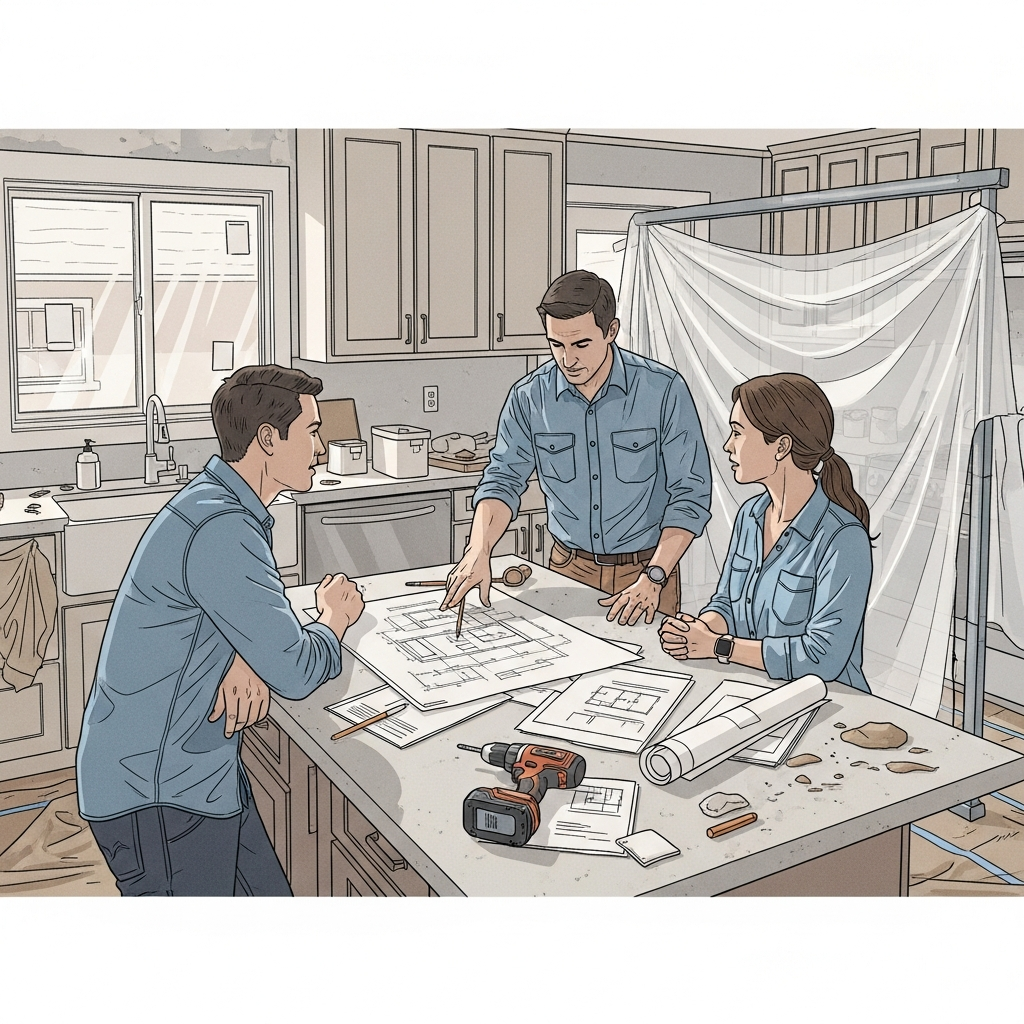
Engaging a licensed contractor should feel like starting a partnership. In your first meetings, expect careful listening and pointed questions: How do you cook? Do you entertain? What are your storage pain points? Do you prefer a quiet morning coffee nook or a central island with seating for homework and snacks? From those conversations comes a plan that aligns layout, materials, and lighting with how your family uses the space. A transparent proposal spells out what is included and what is not, sets milestones, and outlines how changes are handled. The best teams pair organization with empathy, recognizing that your kitchen is the heart of your home, not just another job site.
Design-build advantages for kitchens
Many San Lorenzo homeowners gravitate toward a design-build model for kitchens because it streamlines responsibility and communication. In a design-build structure, the same team that imagines your space also executes it, closing the loop between drawings and reality. This continuity shines during cabinet detailing, appliance coordination, and on-the-fly adjustments when site conditions surprise everyone. The result is fewer handoffs, more accountability, and a tighter alignment between the vision and the finished product. Design-build also supports nimble value engineering—shifting materials or methods to maintain quality and schedule without compromising your priorities.
Permitting and inspections in unincorporated Alameda County
Because San Lorenzo is unincorporated, your kitchen permits and inspections flow through Alameda County. A licensed contractor who regularly works here knows how to assemble code-compliant plans, sequence inspections, and schedule work to keep momentum. That means verifying details like lighting efficacy under energy standards, appropriate venting for cooking appliances, and water-wise fixtures. When permit reviewers request clarifications, a seasoned team responds promptly and professionally. This behind-the-scenes orchestration allows the field work to progress efficiently and with fewer delays.
Code literacy: Title 24, CALGreen, and practical details
California’s code framework sets expectations for safety, efficiency, and environmental stewardship. Title 24 guides lighting and energy performance, while CALGreen encourages water savings and responsible waste management. In the kitchen, that translates to specifics: appropriate lighting controls, tamper-resistant receptacles where required, GFCI/AFCI protection in the right places, ducted ventilation sized to cooking style, and efficient fixtures that do not sacrifice performance. A licensed contractor carries this knowledge into every phase so that the details you do not see—from nail plates over protected runs to proper clearances around cooking zones—support the beauty you do see.
Dust, noise, and living through construction
We often talk about schedules and selections, but your day-to-day comfort matters just as much. A conscientious licensed team sets up dust barriers at strategic locations, uses air scrubbers when necessary, and pays attention to pathways so kids, pets, and crews coexist safely. They communicate work hours, coordinate particularly noisy tasks, and make sure the home is tidy at the end of the day. These practices are not luxuries; they are signs of respect that maintain your quality of life while your kitchen evolves from plan to place.
Subcontractors as specialists, not strangers
Even the most capable general contractor relies on specialists for top-quality results. In the best arrangements, electricians, plumbers, tile setters, and countertop fabricators are not random names but trusted partners who have worked together across many kitchens. That familiarity shows up in the seams: a tile layout that meets precisely at a cabinet edge, a receptacle count that balances function with aesthetics, and a sink cutout that anticipates faucet and accessory clearances. Licensed contractors lead these teams with a shared language and a common goal—to deliver a kitchen that functions beautifully and looks effortless.
Transparent communication and documentation
From proposals to punch lists, transparency keeps everyone aligned. A licensed contractor documents site conditions, selections, and any changes so there are no mysteries later. When unexpected conditions arise—say a hidden plumbing offset or a framing quirk—your team will explain options and implications clearly. That clarity extends to scheduling, too, with regular updates that anticipate material arrivals and inspection dates. It is not about flooding you with information; it is about giving you the right details at the right time so decisions are confident and progress is steady.
Quality control and the final stretch
As a kitchen nears completion, the difference between good and great lies in finish carpentry, alignment, and tuning. Doors and drawers should operate smoothly, filler pieces mirror lines perfectly, and caulk lines be crisp and intentional. Licensed contractors structure the final stretch with checklists, touch-up windows, and client walkthroughs that verify both performance and polish. They stand by their work and return to address any lingering items because reputation and licensure both demand it.
How to evaluate proposals without getting lost
When you collect multiple proposals, focus on clarity and completeness. Look for plans and narratives that tell the same story, from demolition to finishes. Ask how appliances will be integrated, where lighting controls will live, and how ventilation is sized. Compare allowances and exclusions thoughtfully so you are not chasing apples-to-oranges differences. The goal is not to find the shortest document; it is to find the most transparent one—the proposal that helps you envision the experience from first day of demolition to the celebratory first meal in your upgraded space.
Design trends that work in San Lorenzo kitchens
Trends come and go, but the ones that endure in our neighborhood blend mid-century restraint with contemporary utility. Slim shaker or flat-panel doors, durable matte finishes, and quartz or porcelain surfaces that shrug off daily wear all shine in busy households. Consider a workstation sink that condenses prep tasks, lighting layers that move from bright task to evening ambiance, and hardware that feels good in the hand. If you favor color, a muted green or blue on the lowers or island can nod to the Bay while upper cabinets remain light and airy. Good design is not a catalogue; it is a conversation with your home.
Mid-project adaptability and value engineering
Even the best-laid plans meet surprises. A licensed contractor brings a toolkit of alternatives—materials with similar performance, sequencing adjustments that preserve schedule, or small layout nudges that improve function without triggering bigger changes. Value engineering is not about cutting corners; it is about protecting intent while staying responsive. In kitchens, that might mean adjusting cabinet depths to clear a structural element, shifting a lighting layout for better balance, or selecting a different tile size that accelerates installation without sacrificing the look you love. Guidance from a team with deep kitchen remodeling services ensures these pivots lead to satisfying outcomes.
Frequently asked questions
Q: Why is hiring a licensed contractor so important for a kitchen remodel?
A: Licensure signals verified experience, legal accountability, and adherence to building codes. It protects you through clear contracts, established dispute pathways, and professional standards that guide everything from safety practices to inspection readiness.
Q: Who pulls permits for a kitchen remodel in San Lorenzo?
A: Typically, the contractor pulls permits and coordinates inspections, especially when work involves electrical, plumbing, or structural changes. Their experience with Alameda County processes helps avoid delays and keeps work aligned with code requirements.
Q: How do I verify a contractor’s license?
A: You can check a license number directly with state resources, confirm insurance and bonding, and ask for recent local references. A reputable contractor will provide this information readily and gladly explain how licensure shapes their workflow and quality control.
Q: Can I live at home during the remodel?
A: Most families do. Your contractor can help set up a temporary kitchenette, outline daily work hours, and create dust barriers to keep living areas comfortable. Clear communication about access and pets supports a smoother experience.
Q: What is the typical sequence of a licensed kitchen remodel?
A: After design and selections, the contractor submits for permits, schedules demolition, coordinates rough trades, and lines up inspections. Then come insulation and drywall, cabinet installation, counters, tile, and final plumbing and electrical. A walkthrough at the end confirms performance and details.
Q: How are changes handled if we adjust the plan mid-project?
A: Licensed contractors use written change orders that describe the modification, any timeline implications, and how the work will be executed. This documentation keeps the project transparent and prevents misunderstandings.
Your next step starts with a conversation
If you are ready to imagine how your kitchen could work better for your family, let’s talk. We will listen first, then translate your ideas into a plan that respects your home’s character and your daily routine. From permit submittal to the final wipe-down before move-in, our team is built to guide you with clarity and care. Begin your journey by exploring professional San Lorenzo kitchen remodeling with a licensed local team that treats your home like their own.